Housekeeping and field ops
The turnover is a job with evidence, not a message in a group chat.
A checkout schedules the clean. The cleaner works a checklist on their phone. The inspection leaves photos with a timestamp. A damage claim becomes a number in the ledger. Every step belongs to the business rather than to whoever happened to be on shift.
The turnover board
Today's cleans, in the order the day happens.
The cleaning queue leads with When: every clean shows its day, and a same-day turnover shows the time it must be ready by. Each job carries the unit, the window it must fit in, the person it is assigned to, and its state. A Missing photos / videos card filters to the cleans that finished without their evidence. Dispatch is a click, or a rule that assigns by team.
Prep time on the listing is what keeps the board honest. A same-day arrival that no cleaner could physically reach never gets sold in the first place.
How dispatch works →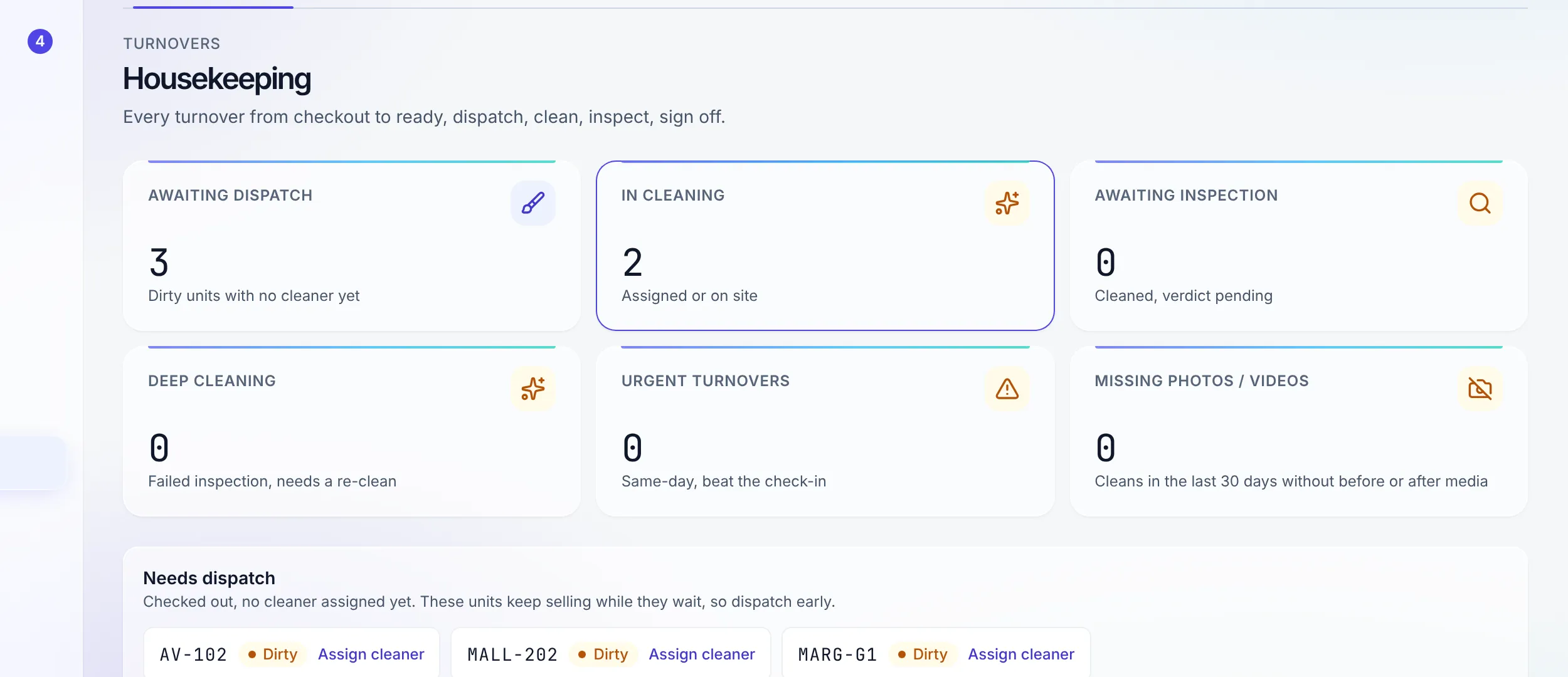
A cleaner's day
A small screen for people with their hands full.
The cleaner works from My tasks today: the jobs assigned to that person and nothing else. No money, no guest phone numbers, no units they are not working. Each clean runs in order, before photo, start, after photo, mark cleaned, with a skip that asks for a reason. A photo taken in a basement with no signal waits in an outbox and sends itself later.
Mark cleaned & ready closes a clean in one step, or, if you switch on inspection after cleaning, the unit waits for an inspector before it counts as ready.
That narrowness is a permission, not a layout choice. Roles are enforced in the database, so a cleaner's session physically cannot read a payout or a guest's ID document.
How roles are enforced →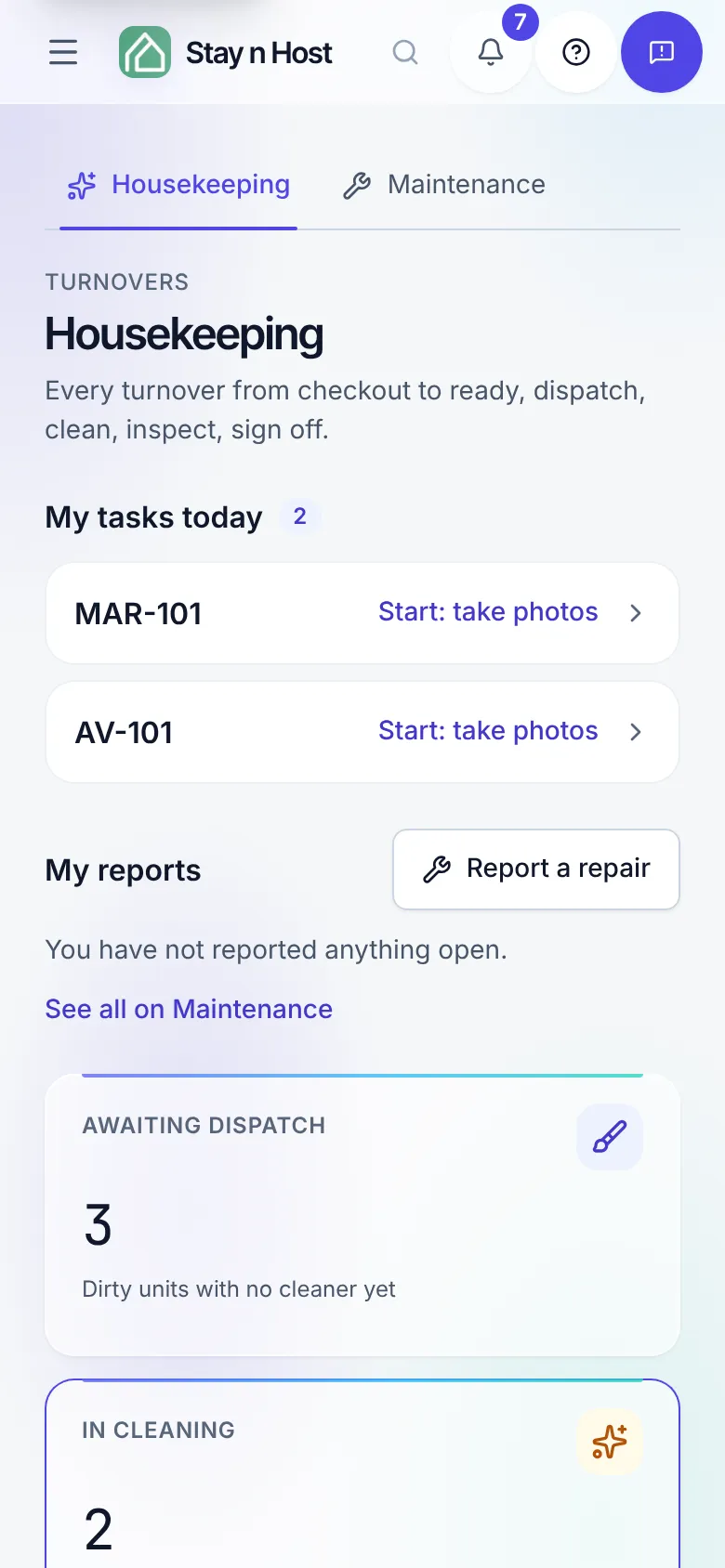
Evidence, not opinions
What happens when something is broken.
Inspections with photos
A turnover inspection walks a checklist and records the state of the unit in photographs, each carrying when it was taken and who took it. The result attaches to both the turnover and the stay.
The inspection flow →Condition evidence on the stay
Check-in and check-out condition records sit on the booking itself, so the before and the after are one click apart when a guest disputes a charge three weeks later.
Damage claims that reach the books
Raise the claim, price it, then charge the guest or write it off. Either way it posts to the ledger, so a write-off is a visible cost of doing business rather than a number nobody recorded.
How it posts →Maintenance tickets
A board of what is broken, with priority, an assignee, photos and the resolution, linked to the expense and the stay. Cleaners report an issue from the job they are on.
Maintenance tickets →Guests you will not host again
A blacklisted guest is flagged at the inquiry, before anyone spends an hour quoting a stay you were never going to take.
The people, not just the jobs
Roster, teams, and getting them paid.
Duty roster
Who covers which days, visible to the team. Dispatch stops being a question of who happens to answer their phone first.
Teams
Group staff so a job goes to a team rather than a person, which survives holidays, illness, and the day somebody leaves.
Payroll-lite
Worked shifts become a payable in the same calendar as rent and utilities, and hit the P&L as the operating cost they are.
How payroll-lite works →Reviews, asked for on time
Track which stays have a review and request the ones that do not, while the stay is still fresh in the guest's mind.
"A clean nobody photographed is a clean you cannot argue about later."
FAQ
Operations questions
Do cleaners need an account and a laptop?
They need a login and a phone browser. A cleaner seat is a real role with a deliberately small view: My tasks today, each clean walked in order (before photo, start, after photo, mark cleaned), and Take photo. A photo taken with no signal waits in an outbox and sends when the signal returns. They cannot see money, guest contact details, or any unit they were not assigned to.
How does a turnover get created?
From the booking. A checkout schedules the turnover for that unit with the prep-time window the listing carries, so the job exists before anyone thinks to create it, even for a stay entered late. Cleaning rules add the rest: a stayover clean every so many days, a deep clean every so many turnovers, and a minimum stay before either applies. You can also dispatch a one-off clean by hand.
What stops a "done" that was never done?
Evidence. An inspection records the state of the unit with photos against a checklist, and the photos carry the time they were taken and the person who took them. The result is attached to the turnover and to the stay, which is what makes a later damage claim arguable rather than a shouting match.
How do damage claims work?
A damage report is raised against a stay with its evidence, then worked as a claim: assessed, priced, charged to the guest or written off. Whatever is decided posts to the books through the same ledger as everything else, so a written-off claim is an expense you can see rather than a number that vanished.
Can I schedule who is on duty?
Yes. The duty roster sets who covers which days, and staff can be grouped into teams so dispatch goes to a group rather than a name. Payroll-lite turns worked shifts into a payable, which lands in the same payables calendar as rent and utilities.
Does anyone have to chase the day by hand?
No. Home opens on what is waiting on you, then arrivals and turnovers due, and the daily ops report sends the same picture to the team on WhatsApp at midnight. Nobody logs in to find out what is happening; it arrives.
Try the whole platform free for 14 days
Full Growth-plan access. No credit card. Your data stays yours.
Start free trial